
Okay, real talk? If you’re over 40 and feeling like your body just decided to play by entirely different rules overnight, you’re not alone. One day you’re rocking your favorite jeans, and the next, you’re wondering why everything’s redistributing itself around your midsection like it’s setting up permanent residence. Thanks, fluctuating estrogen! And don’t even get me started on that metabolism that decided to take a permanent vacation.
But here’s the good news (finally, right?): walking for weight loss is hands-down one of the most effective, sustainable, and honestly, sane approaches you can take. No fancy gym membership required. No brutal workouts that leave you unable to walk up stairs for three days. Just you, some comfy shoes, and the great outdoors (or your treadmill if it’s freezing outside—no judgment).
Why 2026 Is Walking’s Moment
Here’s something cool: we’re living through what fitness experts are calling the “Back to Basics” pivot. After years of extreme bootcamps and punishing HIIT classes, people are finally waking up to what actually works long-term. Get this—interest in sustainable walking protocols has skyrocketed by nearly 3,000% this year. That’s not a typo. Turns out, the tortoise really does beat the hare.
Here’s what I love about walking: it’s all about consistency over intensity. Forget those crazy intense workouts that sound amazing on day one but have you burning out by day five. Walking is sustainable. And the research backs this up! Studies show that women who stick to a consistent walking routine (about 3 times a week for 50-70 minutes) can reduce body fat by up to 1.5% and trim over an inch off their waistlines. Not too shabby for just putting one foot in front of the other, right?
- The Science of Weight Loss: 5 Ways Walking Melts Fat
- Maximizing Calorie Burn: Strategic Walking Techniques
- Incorporating Resistance for Enhanced Metabolism
- The Lifelong Habit: Consistency, Recovery, and Mental Health
- Tech Support: AI Coaching in 2026
- The "Phantom Plateau": Why the Scale Lies
- The Scale Stall Doesn't Mean You're Failing
- Tracking Your Success (Metrics that Matter)
- Frequently Asked Questions
- What is the best time of day to walk for weight loss?
- Is walking enough to lose weight without changing my diet?
- How fast should I walk for maximum fat burning?
- Can walking help reduce belly fat specifically?
- Is walking better than running for weight loss after 40?
- Conclusion: Take the Next Step
The Science of Weight Loss: 5 Ways Walking Melts Fat
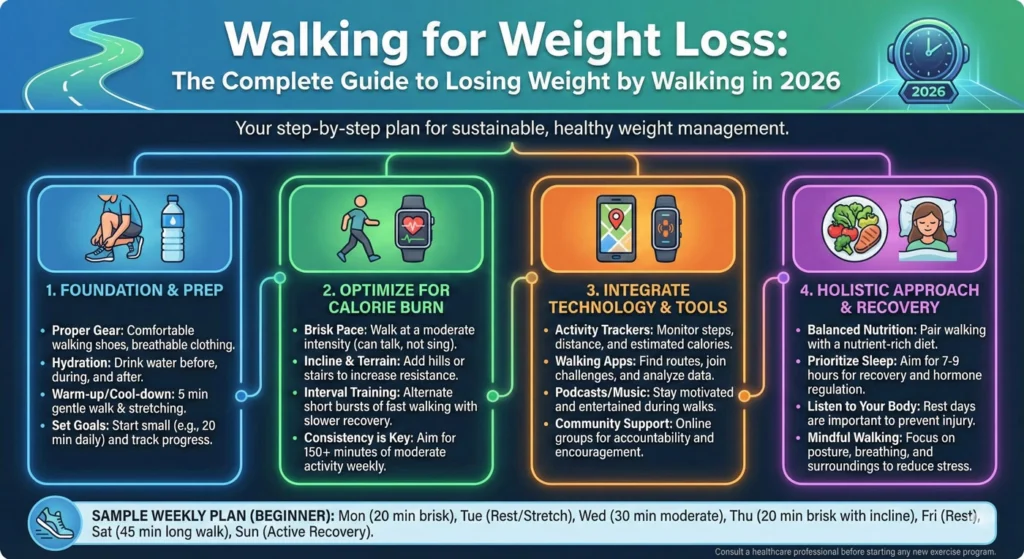
Alright, let’s get nerdy for a minute (but like, fun nerdy). You might be wondering, “Can walking really help me lose weight?” Spoiler alert: absolutely yes. Here’s how:
1. Calorie Expenditure: The Math Actually Works in Your Favor
So here’s the deal—walking burns roughly 100 calories per mile. At a moderate pace (think 3 mph, like you’re trying to get somewhere but not racing), you’re burning about 4-7 calories per minute depending on your weight and fitness level. It might not sound like much compared to those crazy HIIT workouts, but it adds up fast. Plus, you can actually sustain this without wanting to quit life.
And yes, running burns about 10-30% more calories over the same distance—but here’s the kicker: if you have a BMI over 28, running generates ground reaction forces that are 2.5 to 3 times your body weight. That translates to 280% higher knee stress compared to walking. Your joints at 40+? They’re not voting for that option.
2. Preserving Lean Muscle Mass: Keeping Your Metabolism Happy
This is huge, especially as we get older. When you diet without exercise, you lose both fat and muscle. Losing muscle? Not ideal. Your muscle is like your body’s personal calorie-burning furnace—it keeps your Resting Metabolic Rate (RMR) humming along. Walking helps you maintain that precious lean muscle while you’re dropping fat, which means your metabolism doesn’t tank like it would with crash dieting.
3. Targeting Visceral Belly Fat: Goodbye, Muffin Top
You know that stubborn belly fat that just won’t budge? The kind that wraps around your middle like a cozy (but unwanted) blanket? That’s visceral fat, and it’s not just annoying—it’s actually harmful to your health. The awesome news? The latest research confirms what we’ve been saying: 150 minutes of weekly brisk walking (that’s just 30 minutes, 5 days a week) is enough to significantly reduce this deep belly fat—even without drastic dietary changes. Your walking for weight loss plan directly targets this problem area.
4. Appetite Regulation: No Post-Workout Hunger Monster
Ever done an intense workout and then felt like you could eat an entire pizza by yourself? Yeah, me too. Here’s where walking shines: unlike high-intensity exercise that suppresses your hunger hormone (ghrelin) by 25% and leaves you ravenous later, walking doesn’t trigger that extreme “I MUST EAT EVERYTHING” response.
Now, there’s a small catch—walking can slightly increase ghrelin by about 12%, which might trigger some post-walk cravings. The fix? Pair your walks with a high-protein snack or what I call an “emotional reset moment”—maybe some herbal tea and five minutes of just sitting quietly. This prevents the mindless snacking that can offset about 28% of the calories you just burned.
5. Improved Adherence and Mood: The Secret Weapon
Let’s be honest—motivation is fleeting. It’s here one day and gone the next. But walking? It naturally boosts your mood by releasing endorphins and lowering stress hormones like cortisol. When something makes you feel good, you’re way more likely to stick with it. And sticking with it is literally the whole game. Discipline beats motivation every single time.
Maximizing Calorie Burn: Strategic Walking Techniques
Okay, so you’re sold on walking. But how do you make sure you’re getting the most bang for your buck? Let me break it down for you.
Finding Your Fat-Burning Pace (The Talk Test)
Forget complicated heart rate monitors and fancy zones for a second. Here’s the easiest way to know if you’re walking at the right pace: try talking. You should be able to speak in short sentences—like “Yeah, I’m good” or “This hill is killing me”—but having a full-on conversation about your weekend plans should be slightly challenging. That sweet spot? That’s your fat-burning zone, usually around 60-70% of your maximum heart rate.
Pro tip: If you’re cruising along at over 3 miles per hour, you’re probably in the right zone. If you can belt out your favorite Taylor Swift song without breaking a sweat? Pick up the pace, friend.
Step Goals vs. Consistency
Everyone talks about that magical 10,000 steps per day number. And yeah, it’s a solid goal for weight loss. But here’s the thing—if you’re currently doing 3,000 steps a day, jumping straight to 10,000 is gonna burn you out faster than a cheap candle.
Start where you are. If 7,000-8,000 steps feels doable, aim for that. The key is to increase your current baseline and then stay consistent. I’d rather see you hit 7,000 steps every single day than hit 10,000 once and then quit because it felt impossible.
Advanced Walking Methods (Beyond the Stroll)
Once you’ve got your basic walking routine down, it’s time to level up. These techniques are game-changers for your walking for weight loss plan:
Japanese Interval Walking: The 2026 Game-Changer
Okay, this is THE walking protocol everyone’s talking about in 2026, and for good reason. Japanese Interval Walking Training (IWT) is stupidly simple but ridiculously effective. Here’s how it works:
The 3-3 Method:
- Walk briskly for 3 minutes (like you’re late for an appointment—breathing hard but not dying)
- Slow down for 3 minutes (casual, comfortable strolling)
- Repeat this cycle 5 times for a total of 30 minutes
- Do this at least 4 times a week
Why does this work so well? Studies show it’s 10 times more effective than just hitting 10,000 steps for improving cardiovascular fitness, thigh muscle strength, and blood sugar control. This interval approach mimics high-intensity training and creates what’s called the EPOC effect—basically, your body keeps burning extra calories even after you’re done walking. It’s like getting bonus points.
Real Results: Jeanette’s 30-Day Transformation
Nurse Jeanette George tried the Japanese walking method for 30 days and documented everything. She hit between 10,000 and 16,000 steps daily, using the intentional 3-minute brisk/3-minute slow pattern. The results? Toned legs, deeper sleep, and despite reintroducing some carbs into her diet, she dropped an additional 5 pounds in just those 30 days. The alternating pace made all the difference.
Inclined Walking: Let Gravity Be Your Resistance
Find a hill. Seriously, that’s it. Walking uphill activates about three times more muscle fibers (hello, glutes and quads!) and burns 17-32% more calories than walking on flat ground. If you’re on a treadmill, even a 5-10% incline makes a massive difference. Your booty will thank you later.
Power Walking: Channel Your Inner Mall Walker
Remember those speed-walkers who look slightly ridiculous but are actually super fit? They’re onto something. Power walking uses a faster pace (about 4.5-5.5 mph) and deliberate arm movements to get your heart rate up and engage more muscle groups. You might feel a little silly at first, but who cares? You’re torching calories.
Nordic Walking: Poles Are Your New Best Friend
Think cross-country skiing but without the snow. Using poles engages your arms, shoulders, and core, potentially burning up to 20% more calories than regular walking. Plus, it takes pressure off your knees and gives you an upper body workout at the same time. Win-win.
IL: Medical Weight Loss Program: can help you determine which walking method best suits your current fitness level and weight loss goals.
Incorporating Resistance for Enhanced Metabolism
Now, I know we’re talking about walking here, but let me throw something else into the mix that’ll supercharge your results.
Integrating Bodyweight Breaks (Full Body in Minutes)
Here’s the thing about getting older—we naturally lose muscle (it’s called sarcopenia, and it’s as annoying as it sounds). To fight back, try integrating some bodyweight exercises during your walks. Nothing crazy! Just pause every 10 minutes or so and do some walking lunges, step-ups on a bench, or modified push-ups against a park bench.
Doing this at least twice a week will help you maintain (or even build!) muscle while you’re shedding fat. Your metabolism will stay revved up, and you’ll look more toned as the weight comes off.
Using Weights Safely (Avoiding Joint Strain)
I’m gonna be real with you—those ankle weights that were popular in the ’80s? Not recommended. They can mess with your natural walking gait and strain your joints. If you want to add resistance, go with light hand weights (1-3 pounds max) or a weighted vest.
The key word here is light. If you’re struggling to maintain your natural form or your shoulders are screaming, the weights are too heavy. Speed and proper form always trump extra weight.
Get Your Personalized Walking & Nutrition Plan Today! Our team can help you safely incorporate resistance training into your routine.
The Lifelong Habit: Consistency, Recovery, and Mental Health
Okay, this is where the rubber meets the road. You can have the perfect walking technique and know all the science, but if you don’t stick with it, none of it matters. Let’s talk about how to make this a permanent part of your life.
Real Success Story: Sarah’s Menopause Strategy
Sarah, a 53-year-old accountant, was dealing with that frustrating menopausal weight gain—you know, where everything migrates to your midsection overnight. She was doing casual evening strolls but not seeing results. When she switched to the structured 30-minute Japanese walking protocol four times a week, everything changed. Not only did she stabilize her basal metabolic rate, but her sleep quality improved dramatically. And better sleep? That’s essential for resisting those hormone-driven cravings we all get. Sarah’s transformation showed that releasing “emotional weight” and managing chronic stress allows your body to feel “safe” enough to let go of fat stores.
Strategies for Unyielding Consistency
Active Recovery: Rest Doesn’t Mean Netflix All Day
On your “rest” days, don’t just collapse on the couch (okay, maybe do that for a bit). Try some gentle movement like yoga, swimming, or a super easy stroll. This keeps your body moving without the intensity, helping with recovery while maintaining your habit.
Habit Stacking: Piggyback on What Already Works
This is pure genius. Attach your walk to something you already do every day. Have your morning coffee and then walk. Watch the evening news? Walk first. Lunch break? You guessed it—walk. When walking becomes part of an existing routine, you don’t have to rely on willpower or motivation. It just… happens.
The Dog-Walking Glow-Up: Meri’s Story
Reality TV personality Meri Brown is a perfect example of this. She utilized what she called her “Zona” plan—simply walking her dog approximately two miles every single day. Combined with high protein intake and managing her stress levels (cortisol management is huge!), she achieved a dramatic transformation. The lesson? You don’t need anything fancy. Just consistent daily movement paired with managing your stress so your body feels safe enough to release stored fat.
Indoor Alternatives: Because Weather Happens
Look, I live in reality. Sometimes it’s pouring rain. Sometimes it’s -10 degrees. Sometimes you just don’t feel like dealing with the elements. That’s when you hit up the mall (mall walking is making a comeback, and I’m here for it), hop on the treadmill, or even walk in place at home while watching your favorite show.
The VR Revolution: Sarah’s Gaming Strategy
Here’s something cool from 2026—Sarah M., a 34-year-old office worker, used VR-enhanced fitness (FitXR) to gamify her walking and cardio routines. By immersing herself in a “virtual studio,” she completely distracted herself from the exertion and lost 18 pounds in four months. The community-driven gaming loop provided the consistency she previously lacked on a boring treadmill. Is walking or running better for weight loss when it’s freezing outside? Neither—because you won’t do them. Indoor walking (or VR walking!) wins by default.
Mindful Walking: Your Moving Meditation
Try this once in a while: walk without your phone, without music, without distractions. Just you, your thoughts, and your surroundings. This nature-based “mindful” walking is incredible for reducing stress and lowering cortisol—that stress hormone that loves to hold onto belly fat. Plus, lower stress = lower cortisol = easier weight loss. Sometimes you get those brilliant creative ideas that only seem to pop up when your mind is relaxed.
Tech Support: AI Coaching in 2026

One of the coolest developments this year? AI-driven fitness apps have become game-changers for staying consistent:
Avo Vision & Instant Feedback: Snap a photo of your meal and get instant nutritional feedback. No more tedious calorie counting or “math homework” at dinner.
Form Correction: AI now uses your smartphone camera to give you real-time feedback on your walking posture and cadence, reducing injury risk. It’s like having a personal trainer in your pocket.
Dynamic Plans: Apps connected to wearables (like Oura or WHOOP) analyze your sleep and recovery scores, then adjust your workout intensity in real-time. Didn’t sleep well? Your app knows and suggests an easier walk today. It’s personalized coaching that actually works.
Avoiding Common Mistakes After 40
Let’s talk about the pitfalls I see all the time:
Neglecting Diet: You Can’t Out-Walk a Bad Diet
I’m just gonna say it: you cannot out-exercise a terrible diet. I don’t care how much you walk. That 30-minute walk you just crushed? It can be completely negated by a single large muffin and a fancy coffee drink. Walking for weight loss absolutely works, but it needs to be paired with proper nutrition and a caloric deficit. The magic happens when you combine movement with smart eating.
IL: Nutrition Counseling: can help you create a sustainable eating plan that complements your walking routine perfectly.
Ignoring Strength Training: Cardio Alone Won’t Cut It
If you only walk and never do any resistance training, you risk losing muscle along with fat. And remember—muscle is your metabolism’s best friend. Try to incorporate some form of strength training at least 2-3 times per week. It doesn’t have to be powerlifting. Bodyweight exercises, resistance bands, light dumbbells—all of these work.
Poor Recovery: Stretching Isn’t Optional
Do some dynamic stretching (like leg swings and arm circles) before your walk to warm up. After? Static stretching and maybe some foam rolling to prevent injury and soreness. Your 40+ body needs this TLC more than your 20-year-old body did. Trust me on this one.
The “Phantom Plateau”: Why the Scale Lies
Here’s something that trips up SO many people, and I need you to understand this: your body weight is 60-80% water. Let me say that again. Most of what you see on the scale is literally just water, not fat.
The Scale Stall Doesn’t Mean You’re Failing
Ever started a new walking routine, felt amazing, your clothes fit better, but the scale didn’t budge for two weeks? Here’s what’s actually happening:
Water Retention from Muscle Repair: When you start a new walking routine (especially something intense like Japanese Interval Walking), you create microscopic tears in your muscle fibers. This is normal! But your body sends fluid to those areas to repair the damage—this is called Exercise-Induced Muscle Damage (EIMD). That inflammatory response and localized swelling can add several pounds of water weight that perfectly masks your fat loss on the scale for weeks.
Glycogen and Water Binding: Every gram of carbohydrate (glycogen) you store binds with 3-4 grams of water. So if you had a higher-carb day, that’s not fat—it’s just your body holding onto water to store that energy.
Sodium and Hormones: Salt intake and hormonal cycles (especially for women) can cause major water fluctuations. You can be “up” 3-5 pounds just from water retention during certain times of the month.
The solution? Understand that consistency over 12 weeks matters way more than a single “perfect” week. Trust the process. Take measurements and progress photos. Notice how your clothes fit. The scale is just one data point, and honestly? It’s the least reliable one.
Tracking Your Success (Metrics that Matter)
Get yourself a fitness tracker or use an app to log your steps, distance, and calories. But here’s what most people miss: also track your mood and energy levels. Sometimes the scale isn’t moving much, but you’re sleeping better, feeling happier, and have more energy to play with your kids or grandkids. Those wins count just as much (maybe even more).
Frequently Asked Questions
Let me answer the questions I get asked constantly:
What is the best time of day to walk for weight loss?
Honestly? The best time is whatever time you’ll actually do it consistently. That said, morning walks can give your metabolism a little kickstart for the day, and you’re less likely to skip them because “life happened.” But if you’re a night owl, evening walks are totally fine. Consistency beats timing every single time.
Is walking enough to lose weight without changing my diet?
Nope, sorry. Weight loss is mostly made in the kitchen, friend. Walking supports weight loss by burning calories and improving your overall health, but if you’re still eating like you’re training for a hot dog eating contest, the scale isn’t gonna budge much. Think of walking as the sidekick to your nutrition—Batman needs Robin, but Robin can’t save Gotham alone.
How fast should I walk for maximum fat burning?
Aim for a brisk pace—somewhere between 3-4 mph—where you can still talk but couldn’t sing your favorite song. This puts you in the fat-burning zone (that 60-70% max heart rate sweet spot we talked about earlier). You should feel like you’re working, but not dying.
Can walking help reduce belly fat specifically?
Yes! Regular moderate aerobic activity like walking is specifically associated with lower levels of visceral fat—that stubborn belly fat that hangs around your midsection. You can’t spot-reduce fat (wouldn’t that be nice?), but walking consistently will help shrink that problem area over time.
Is walking better than running for weight loss after 40?
Great question! Running burns more calories per minute, sure. But walking is lower impact, easier on your joints, and way more sustainable long-term—especially if you’re dealing with any knee or hip issues (which, let’s be real, many of us are after 40). Plus, walking burns roughly the same calories per mile as running, just takes a bit longer. Most importantly? You’re way more likely to stick with walking, and adherence is everything. Is walking or running better for weight loss? The one you’ll actually do consistently wins.
Conclusion: Take the Next Step
Here’s what I want you to remember: walking is your foundation. It’s the low-barrier, no-excuses entry point to fitness that delivers both physical and mental health benefits that seriously compound over time. We’re talking better mood, stronger bones, healthier heart, lower blood sugar, reduced inflammation, and yes—sustainable weight loss that actually sticks.
Your 2026 Walking Roadmap:
Baseline: Aim for 7,000–10,000 steps daily to stop age-related weight creep in its tracks.
Intensity: Incorporate 30 minutes of Japanese Interval Walking (3 minutes brisk / 3 minutes slow) four times a week to drive fat mobilization.
Hormonal Control: Pair your activity with high-protein intake and nature-based mindful walks to lower cortisol and manage those appetite hormones.
Perspective: Understand that scale stalls are often fluid-driven (muscle repair and water retention) and that consistency over 12 weeks matters infinitely more than one “perfect” week.
You don’t need to be perfect. You don’t need fancy equipment. You don’t need to walk 10 miles a day. You just need to start where you are, stay consistent, and trust the process. Your body at 40+ is different than it was at 25, and that’s okay. Actually, it’s more than okay—it means you get to be smarter about your approach.
Walking for weight loss isn’t sexy or trendy. It won’t get you featured in some extreme fitness magazine. But you know what? It works. It’s sustainable. It won’t destroy your joints. And it’s something you can do for the rest of your life, not just until you burn out in 6 weeks.
So lace up those shoes, pick your favorite podcast or playlist (or embrace the silence), and take that first step. Your future self is already thanking you.
References: