
Okay, so you’ve probably heard about intermittent fasting (IF) by now, right? It’s been everywhere lately—from your favorite fitness influencer’s Instagram to your coworker who won’t stop talking about how amazing they feel. But here’s the thing: IF isn’t really about what you eat. It’s all about when you eat. Pretty cool concept, actually.
Now, if you’re thinking “Yeah, but isn’t that the whole 16:8 thing where you basically skip breakfast and feel hangry all morning?”—I hear you. That’s where the 14:10 intermittent fasting schedule comes in, and honestly? It’s kind of a game-changer for beginners.
The 14:10 method means you fast for 14 hours (which includes your beauty sleep, thank goodness) and eat all your meals within a 10-hour window. It’s like IF’s friendlier, more approachable cousin. Perfect if you’re new to this whole time-restricted eating thing, super active, or just want something you can actually stick with long-term without feeling like you’re punishing yourself.
Here’s what we’re diving into today:
- How the 14:10 schedule actually works (spoiler: it’s simpler than you think)
- The real science behind metabolic switching and fat burning
- Proven health benefits backed by actual research data
- A critical safety warning about longer fasts that most blogs conveniently skip over
- Practical tips to make this work for YOUR life
- Who should definitely skip IF altogether (seriously important stuff)
And look, I’m not just throwing random health claims at you. We’re talking real clinical data, including some recent findings that honestly surprised me about the risks of more extreme fasting schedules. Let’s get into it!
- What is the 14:10 Intermittent Fasting Method?
- The Physiological Mechanism: Metabolic Switching and Fat Burning
- Science-Backed Benefits of the 14:10 Schedule
- CRITICAL SAFETY WARNING: Risks of Longer Time-Restricted Eating
- Implementing Your Optimal 14:10 Fasting Schedule
- Maximizing the 10-Hour Eating Window
- Common Mistakes That Sabotage Results
- Who Should NOT Try Intermittent Fasting (Critical Disclaimer)
- Contraindicated Groups
- Frequently Asked Questions
- Why is 16 hours considered a standard fast duration?
- What are the basic rules for breaking a 14:10 fast?
- Does intermittent fasting help with mental clarity?
- Can I exercise while on a 14:10 intermittent fasting schedule?
- How long does it take for the body to adapt to intermittent fasting?
- How long before I see results from the 14:10 method
- Conclusion: Sustainability and Long-Term Health
What is the 14:10 Intermittent Fasting Method?
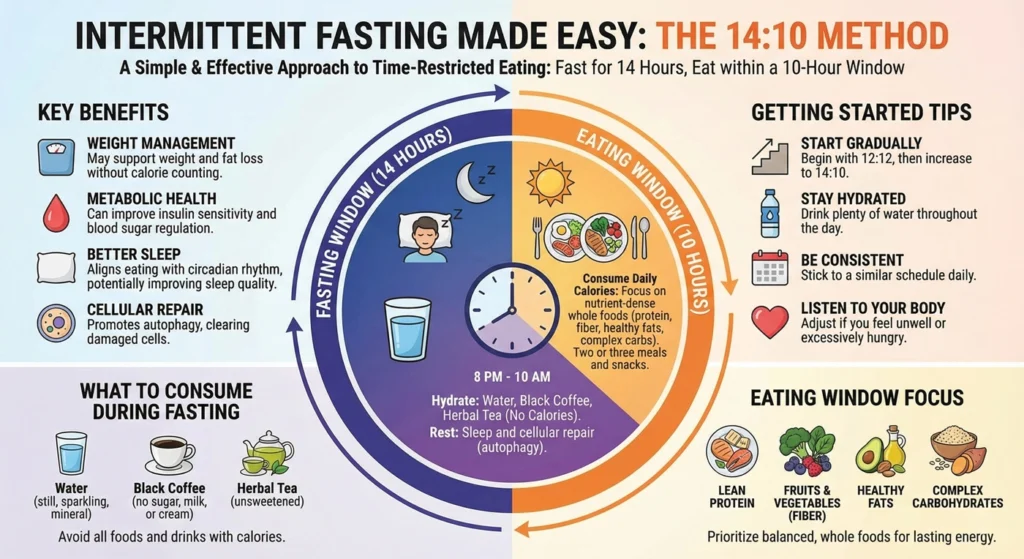
Alright, let’s break this down super simply. The 14:10 intermittent fasting schedule means you eat all your meals within a 10-hour window, then you fast for 14 hours. That’s it. That’s the whole thing.
So let’s say you finish dinner at 7 PM. You wouldn’t eat again until 9 AM the next morning. But here’s the beautiful part—most of that fasting time happens while you’re sleeping! You’re basically fasting in your dreams. Genius, right?
This approach is technically called Time-Restricted Eating (TRE), which is a fancy way of saying you’re just condensing your eating into a specific daily timeframe. No complicated rules about cutting out entire food groups or counting every single calorie.
Comparison for Beginners: 14:10 vs. 16:8
Now, you might be wondering how this stacks up against the more popular 16:8 method. Here’s the deal:
The 16:8 intermittent fasting schedule means you fast for 16 hours and eat during an 8-hour window. It’s more restrictive, which can be tough when you’re just starting out. I’ve seen so many people dive straight into 16:8, feel miserable, and give up completely. Don’t be that person.
The 14:10 is like training wheels for your metabolism. It gives you a 10-hour eating window instead of 8, making it way more forgiving and easier to stick with. Think of it as the best intermittent fasting schedule for beginners—you still get tons of benefits without the struggle bus experience.
The Physiological Mechanism: Metabolic Switching and Fat Burning
Okay, science time! But I promise to keep this interesting. So what’s actually happening in your body when you’re fasting?
The Switch from Glucose to Ketones
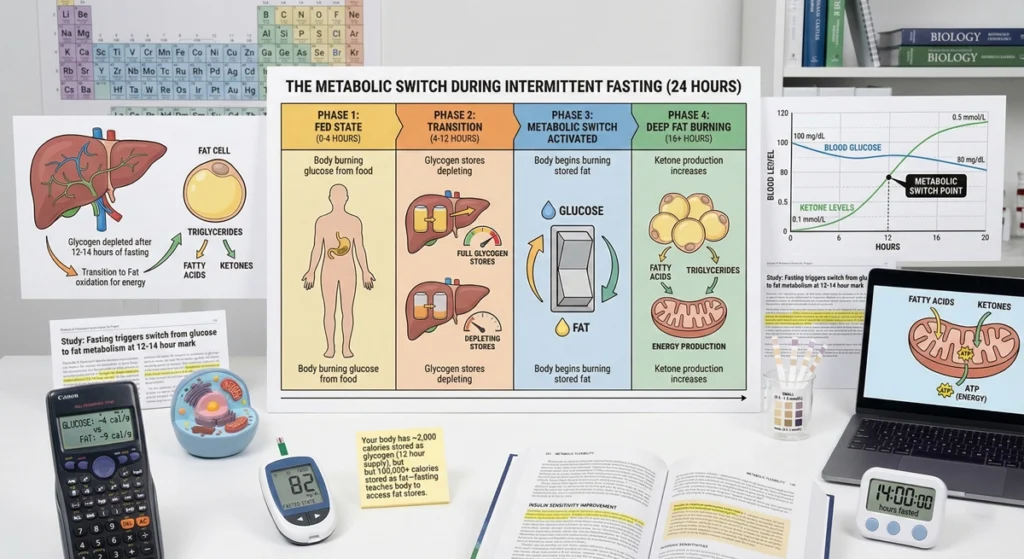
Here’s the cool part: when you stop eating for a while, your body has to find fuel somewhere, right? First, it burns through all the easy stuff—the glucose (sugar) stored in your liver as glycogen. That usually takes about 10-12 hours.
Once that’s depleted, your body’s like “Alright, plan B” and switches gears. This is called metabolic switching, and it’s where the magic happens. Your body starts breaking down fat stores and converting them into something called ketone bodies.
Ketone Bodies as Fuel
These ketone bodies become your new energy source, especially for your brain. Your brain actually LOVES ketones—they’re like premium fuel. This is why a lot of people report feeling super mentally sharp during their fasting window. Your liver basically becomes a fat-burning factory, converting fatty acids into these ketones to keep everything running smoothly.
Real-World Evidence: The Metabolic Timeline
So when exactly does this switch happen? Research gives us a precise answer. Your body typically burns through liver glycogen stores in about 10-12 hours. The metabolic switch—where you actually start burning fat and producing ketones—kicks in right around the 12-hour mark.
This is why the 14:10 method is so effective: you’re spending approximately 2 hours every single day in that fat-burning state. You’re not going into deep ketosis like someone on a keto diet, but you’re training your body to become “metabolically flexible”—meaning it gets really good at switching between burning glucose and burning fat.
Think of it like cross-training for your metabolism.
Cellular Repair (Autophagy)
But wait, there’s more! (I sound like an infomercial, but seriously…) During your fasting period, your cells activate this process called autophagy. The literal translation is “self-eating,” which sounds kinda gross, but it’s actually amazing.
Think of autophagy as your body’s internal cleaning crew. It goes around recycling damaged molecules and proteins, basically taking out the cellular trash. This happens when a protein called AMPK inhibits another protein called mTORC1. (Don’t worry, there won’t be a quiz on this.)
The bottom line? Your cells get cleaner and healthier, which is linked to disease resistance and better overall health. Pretty neat for just… not eating for a bit.
Science-Backed Benefits of the 14:10 Schedule
Alright, let’s talk about what all this fasting can actually DO for you. And I’m not talking about vague “you’ll feel better” promises. We’re looking at real, measurable benefits.
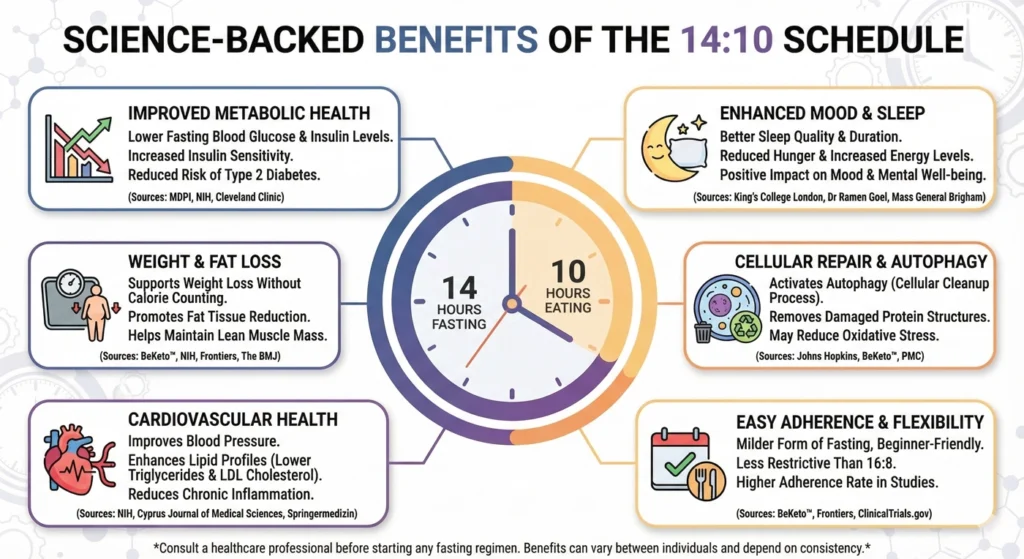
Metabolic Health & Glucose Homeostasis
Here’s where it gets impressive. Research shows that intermittent fasting can seriously improve your metabolic health markers. We’re talking about:
- Better blood sugar control
- Improved insulin sensitivity
- Lower fasting insulin levels
- Reduced HOMA-IR (that’s a measure of insulin resistance)
Real Data Alert: In one 12-week study, participants saw their fasting glucose drop from 95.2 mg/dL down to 87.5 mg/dL. That’s a significant improvement! Your body literally gets better at managing blood sugar when you give it regular breaks from eating.
Weight Management and Body Composition
Let’s be honest—this is probably why you’re here, right? And yeah, the 14:10 intermittent fasting schedule can definitely help with weight management. Studies show it’s effective for short-term weight loss because you’re burning more stored fat during that fasting window.
Plus, researchers have documented statistically significant reductions in both BMI and waist circumference. Translation? You might finally fit into those jeans that have been giving you the side-eye from your closet.
Gut Health
Your gut gets a break too! During fasting, something called the Migrating Motor Complex kicks in—it’s basically a cleaning wave that moves through your digestive system when you’re not eating. Think of it as a reset button for your gut.
Plus, studies show that time-restricted eating can increase the diversity of bacteria in your gut microbiome. More diversity = happier, healthier gut = happier, healthier you.
Cognitive and Physical Performance
Remember those ketones we talked about? They’re not just keeping the lights on—they’re making things brighter. Many people report improved mental clarity and sharper focus during their fasting periods.
Research also shows improvements in verbal memory and potentially better athletic performance. So yeah, you might actually be sharper during your morning fast than after that bagel.
The ZOE Big IF Study: Real People, Real Results
Want to know what happens when over 37,500 people try the 14:10 method? That’s exactly what the ZOE Big IF Study tracked—the largest community science study on intermittent fasting ever conducted.
Here’s what they found after just two weeks on a 10-hour eating window:
Energy levels increased by 18% – Yeah, you read that right. Despite eating less frequently, people felt MORE energetic, not less. This completely flips the “you need to eat constantly for energy” myth on its head.
Mood improved by 9% – Participants reported feeling better emotionally. Stable blood sugar = stable mood. Who knew?
64% reported reduced bloating – This is huge. More than half of participants felt less bloated and uncomfortable. Remember that Migrating Motor Complex we talked about? This is it in action.
Hunger actually decreased – Despite the shortened eating window, people reported feeling less hungry overall. The 14:10 schedule helps reset your hunger hormones (ghrelin and leptin) so you’re not constantly feeling like you need to eat.
But here’s the most important finding: consistency matters. People who kept their eating window consistent every day (say, always 9 AM to 7 PM) saw much better results than those who bounced around. Your body loves rhythm. Give it a predictable schedule and it responds beautifully.
The Study Population: Most participants were around age 60 and 78% were women, which makes this data especially relevant for postmenopausal women and older adults—groups that often get left out of nutrition research.
Targeted Benefits for Specific Groups
Here’s something cool: the 14-hour fasting window is considered ideal for certain groups, including:
- Athletes and active individuals (you need that longer eating window to fuel workouts properly)
- Postmenopausal women (who may benefit from the more moderate approach)
- Anyone wanting a sustainable, long-term eating pattern
Clinical Evidence: 14:10 for Type 2 Diabetes
Here’s where things get really interesting. A randomized controlled trial in Thailand compared the 14:10 method directly against the more popular 16:8 method in 108 patients with Type 2 Diabetes and obesity.
The results? Both methods worked—but here’s the kicker:
- 16:8 group: Lost 4.02% of body weight
- 14:10 group: Lost 3.15% of body weight
That’s less than a 1% difference. Both groups saw significant improvements in fasting blood sugar and HbA1c (the long-term blood sugar marker). Statistically, the metabolic benefits were virtually identical.
The researchers concluded that because 14:10 is easier to stick with long-term, it might actually be the better clinical recommendation for managing diabetes. What good is a slightly more effective protocol if people can’t maintain it?
Important note: If you have diabetes and take medication (especially insulin), you MUST work with your doctor before trying any fasting protocol. Your blood sugar can drop significantly, requiring medication adjustments.
CRITICAL SAFETY WARNING: Risks of Longer Time-Restricted Eating
Okay, this is SUPER important, so I need you to really pay attention here. And honestly? This is stuff that a lot of popular blogs and influencers are conveniently leaving out.
The 8-Hour Risk Alert
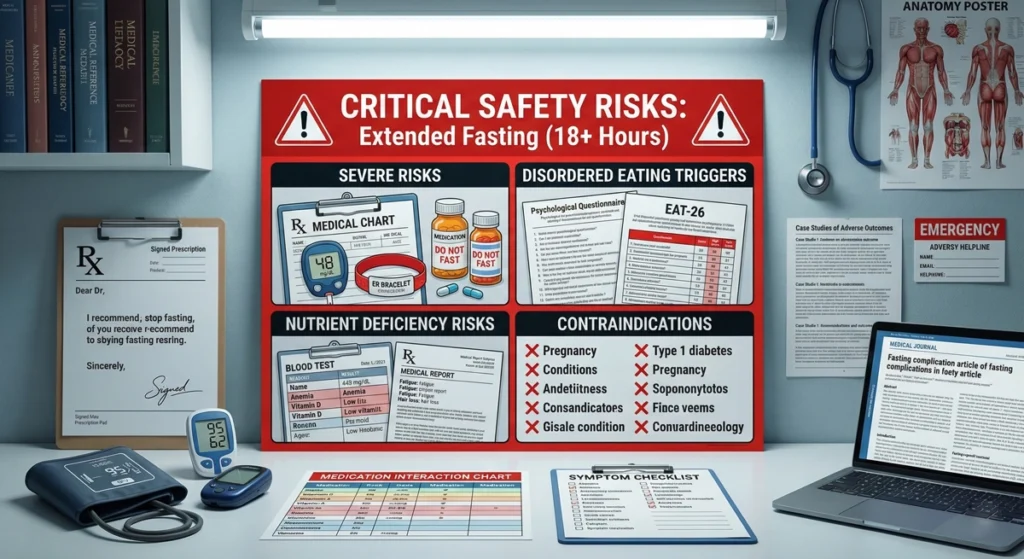
Ready for this? Recent preliminary research looked at over 20,000 adults and found something pretty alarming: people who limited their eating to less than 8 hours per day (think 16:8, 18:6, or 20:4 fasting schedules) had a 91% higher risk of death from cardiovascular disease.
Yeah. Ninety-one percent. That’s… not great.
Context and Caveats
Now, before you panic—let’s add some important context. This research is preliminary. It’s not the final word. Scientists still need to dig deeper into things like:
- What were people actually eating during their windows?
- What was their baseline health like?
- Were there other lifestyle factors involved?
But here’s the thing: this is exactly why you should ALWAYS talk to your doctor before making significant changes to your eating patterns. Like, actually do it. Don’t just think about it.
Why 14:10 Mitigates Risk
And this is exactly why I’m such a fan of the 14:10 intermittent fasting schedule. With a 10-hour eating window, you’re much closer to what researchers consider a “standard schedule of eating across 12-16 hours per day.” You’re getting the benefits of time-restricted eating without potentially pushing things into risky territory.
Think of it as the Goldilocks zone of intermittent fasting—not too extreme, not too lenient, but just right.
Implementing Your Optimal 14:10 Fasting Schedule
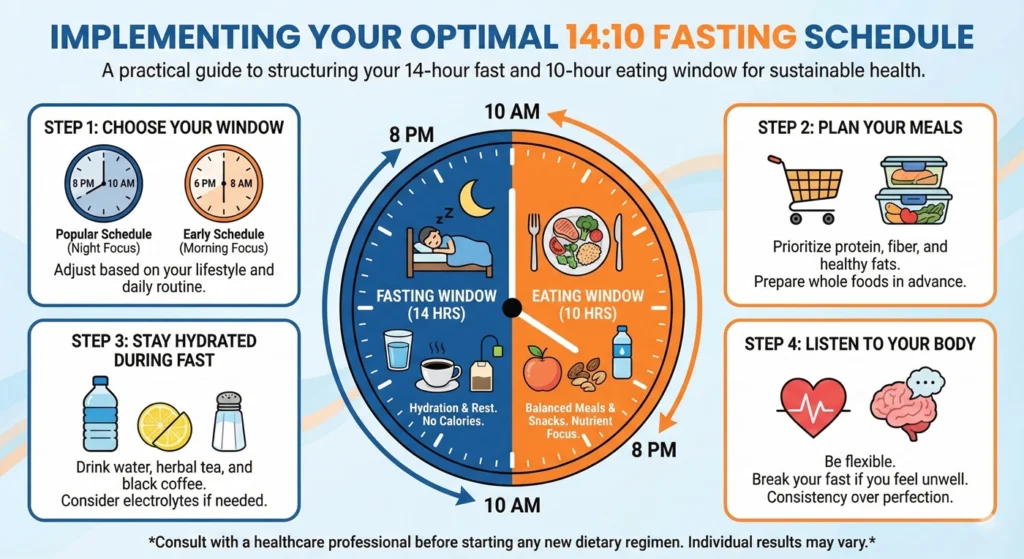
Alright, let’s get practical. How do you actually DO this thing?
Scheduling for Success
Here’s a pro tip that science backs up: try to align your eating window earlier in the day when possible. Your body’s metabolism tends to work better earlier, and eating in sync with your circadian rhythm just makes sense.
Example Schedules
Let’s look at some real-world examples you can actually use:
Option 1 (Early Bird Special):
- Wake up: 5 AM
- Eating window: 8 AM – 6 PM
- Fasting period: 6 PM – 8 AM
This is great if you’re naturally a morning person or have an early work schedule. You get to eat breakfast (revolutionary, I know), and you’re done eating well before bedtime.
Option 2 (Night Owl Edition):
- Wake up: 7 AM
- Eating window: 10 AM – 8 PM
- Fasting period: 8 PM – 10 AM
More of a late sleeper? This one’s for you. You skip traditional breakfast but can still enjoy dinner with friends or family without feeling like you’re on some weird restrictive diet.
Timing Matters: Early vs. Late Eating Windows
Here’s something most people don’t know: when you place your 10-hour eating window can make a difference.
Research shows that “Early Time-Restricted Eating” (finishing your eating by 6-7 PM) tends to produce better results than “Late Time-Restricted Eating” (eating until 8-10 PM). Why?
Circadian insulin sensitivity: Your body is naturally more insulin-sensitive in the morning. The exact same meal eaten at 8 AM will cause a smaller blood sugar spike than if eaten at 8 PM. You’re literally working with your body’s natural rhythms.
Melatonin interference: When your sleep hormone (melatonin) starts rising in the evening, it actually inhibits insulin secretion. Eating when melatonin is high means your pancreas can’t respond properly, leading to higher blood sugar levels.
Sleep quality: Finishing eating 2-3 hours before bed improves sleep quality. Digestion raises your core body temperature, which can interfere with the natural cooling process your body needs for deep sleep.
That said, the best schedule is the one you’ll actually stick with. If early TRE means you can never have dinner with your family, it’s not sustainable. A “good enough” schedule you maintain beats a “perfect” schedule you abandon after two weeks.
Fasting Window Rules
During your 14-hour fast, you can have:
- Water (as much as you want)
- Black coffee (no cream, no sugar, sorry)
- Unsweetened tea (green, black, herbal—go wild)
That’s it. Nothing with calories. I know, I know—but this is what keeps your body in that fasted state where the magic happens.
Maximizing the 10-Hour Eating Window
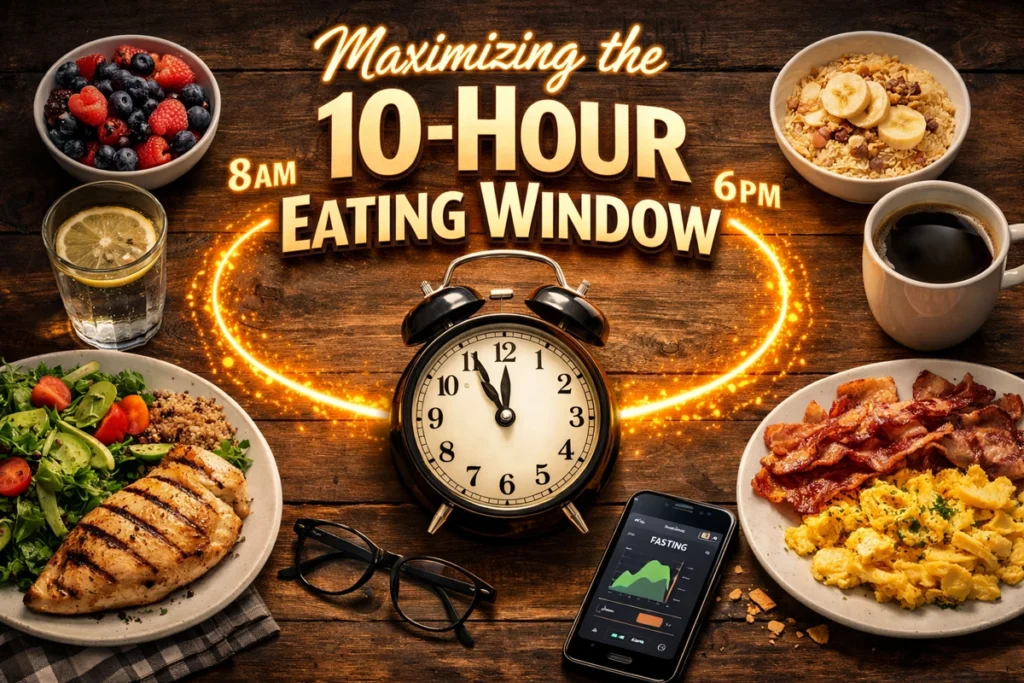
Here’s where a lot of people mess up: they think “Oh cool, I can eat whatever I want for 10 hours!” Not so fast (pun intended).
The Crucial Role of Food Quality
Look, if you’re slamming down donuts, pizza, and ice cream all day during your eating window, you’re basically doing intermittent fasting wrong. The best intermittent fasting schedule in the world won’t help if you’re eating garbage.
Think of it this way: you’ve given your body this amazing break to rest and repair. Don’t immediately trash the place when it opens back up for business.
Prioritize Protein, Fat, and Fiber
These three are your best friends. Seriously. But let me show you exactly how to structure your eating window for maximum benefit.
The “Fast Breaker” (Your First Meal)
This meal sets the metabolic tone for your entire day. Breaking your fast with refined carbs—think bagels, sugary cereal, or pastries—causes a massive insulin spike followed by a crash. Then you’re hungry and craving sugar all day.
Instead, lead with protein and healthy fats:
- Scrambled eggs with spinach and avocado
- Greek yogurt with berries and seeds
- Salmon and veggies from last night’s dinner (breakfast doesn’t have to look like “breakfast food”)
The “Fast Starter” (Your Last Meal)
This meal needs to sustain you through the 14-hour fast. Make it filling but not so heavy that you’re uncomfortable sleeping.
Focus on fiber, complex carbs, and slow-digesting protein:
- Grilled chicken or fish with quinoa and roasted vegetables
- Lentil curry with brown rice
- Stir-fried tofu with peppers and cauliflower rice
Sample 14:10 Meal Plan (9 AM – 7 PM window)
9:00 AM – Breakfast:
3-egg omelet with spinach, mushrooms, and feta
½ avocado on the side
Black coffee or green tea
1:00 PM – Lunch:
Grilled chicken salad with mixed greens, olive oil dressing, chickpeas, and pumpkin seeds
Apple slices with almond butter
4:00 PM – Snack (if needed):
Handful of mixed nuts
Veggie sticks with hummus
6:30 PM – Dinner:
Baked salmon with roasted sweet potato and broccoli
Side salad with lemon vinaigrette
After 7:00 PM:
Herbal tea (chamomile, peppermint) or sparkling water
Nothing with calories!
Protein targets: Aim for 20-30g of protein per meal. This is especially crucial for women and older people to prevent muscle loss during fasting.
Hydration hack: As insulin drops during fasting, your kidneys excrete sodium and water. This can cause headaches and fatigue. Drink water consistently throughout your fast, and consider adding a pinch of mineral salt or using zero-calorie electrolyte supplements.
Avoid Snacking and Refined Carbs
I’m gonna be real with you: constant snacking defeats a lot of the purpose. Try to stick to actual meals—maybe 2-3 solid ones during your window. This keeps your blood sugar more stable and gives your body clear signals about when it’s time to digest vs. when it’s time to fast.
And those refined carbs? White bread, sugary cereals, pastries—they spike your blood sugar dramatically, trigger insulin release, and can lead to fat storage. Not exactly what we’re going for here. Save the treats for occasional enjoyment, not daily staples.
Common Mistakes That Sabotage Results
Even with a simple protocol like 14:10, people make mistakes that kill their progress. Let’s troubleshoot the most common ones:
Mistake #1: Inconsistency (“Metabolic Jetlag”)
You’re perfect with your 9 AM – 7 PM window Monday through Friday, then blow it out on weekends with all-day eating. Sound familiar?
The problem: Your body needs to re-adapt every Monday. The ZOE study found that people who varied their eating window day-to-day saw significantly fewer benefits than those who stayed consistent.
The fix: Stick to your 14:10 schedule at least 5-6 days per week. If a social event disrupts it, just resume the next day. No guilt, no compensatory starvation—just get back on track.
Mistake #2: The “Last Hour” Hunger Panic
Hours 13-14 of your fast can be brutal. You’re so close to your eating window, but the hunger feels overwhelming.
The problem: This is when ghrelin (your hunger hormone) peaks. It comes in waves.
The fix: Understand that hunger isn’t continuous—it rises and falls. Drink sparkling water, go for a 10-minute walk, or dive into a focused task. The wave will pass, usually within 15-20 minutes. Distraction is a powerful appetite suppressant.
Mistake #3: Inadequate Protein Intake
You’re so focused on the timing that you forget to actually eat enough protein during your window.
The problem: Without adequate protein (especially if you’re active or over 50), you’ll lose muscle mass along with fat. You’ll also feel hungrier because protein is the most satiating macronutrient.
The fix: Make protein a non-negotiable part of every meal. Track it for a few days to make sure you’re hitting at least 20-30g per meal (or 0.7-1g per pound of body weight per day).
Mistake #4: The “Licensing Effect”
“I fasted for 14 hours, so I’ve earned this pizza, ice cream, and chips!”
The problem: Viewing the eating window as a free-for-all negates many of the benefits. The ZOE study found that food quality still matters—a lot.
The fix: Shift your mindset from “I’m restricting” to “I’m compressing my nutrition for efficiency.” You’re not depriving yourself; you’re optimizing when and what you eat.
Mistake #5: Eating Too Close to Bedtime
Your window technically ends at 8 PM, so you eat a huge meal at 7:55 PM.
The problem: Digestion raises your core body temperature, which interferes with sleep quality. Plus, lying down right after eating can cause reflux.
The fix: Even if your window allows eating until 8 PM, try to finish your last meal 2-3 hours before actual bedtime.
Who Should NOT Try Intermittent Fasting (Critical Disclaimer)
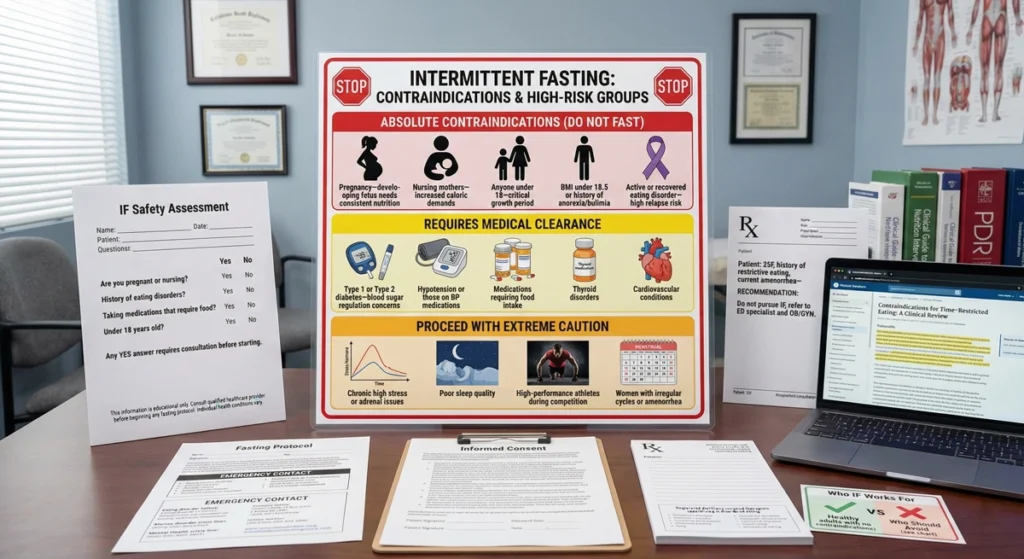
Okay, real talk time. Intermittent fasting isn’t for everyone, and that’s totally okay. In fact, for some people, it can be genuinely harmful.
Medical Consultation
First things first: PLEASE talk to your doctor before starting any intermittent fasting schedule. I can’t stress this enough. This isn’t just me covering my butt legally—this is genuinely important for your health and safety.
Contraindicated Groups
You should not try intermittent fasting (or need close medical supervision) if you:
Have a history of eating disorders: Fasting can trigger disordered eating patterns or exacerbate existing issues. Your mental health is way more important than any potential benefits from IF.
Are pregnant or breastfeeding: Your body needs consistent nutrition right now. This is not the time to experiment with fasting. Growing a human or feeding one requires steady fuel.
Have advanced diabetes or Type 2 diabetes on certain medications: Especially if you’re taking insulin or medications like Gliclazide, fasting can cause dangerous hypoglycemia (low blood sugar). This can be life-threatening. Don’t mess around with this.
Take medications that must be taken with food: Pretty straightforward—if your meds need food, fasting makes that complicated or impossible.
Have certain other medical conditions: Talk to your doctor. Seriously. Every person is different, and your healthcare provider knows your specific situation.
Frequently Asked Questions
Why is 16 hours considered a standard fast duration?
The 16-hour mark is when metabolic switching really gets going for most people—your body has fully transitioned from burning glucose to burning fat and producing ketones. That said, you still get significant benefits from 14 hours, especially when you’re consistent with it. The 16:8 method became popular because it hits that metabolic sweet spot, but as we discussed, the 14:10 schedule might actually be safer and more sustainable for most people.
What are the basic rules for breaking a 14:10 fast?
Breaking your fast doesn’t need to be complicated! Start with something gentle—maybe some protein and healthy fats. A lot of people like eggs with avocado, Greek yogurt with nuts, or a protein smoothie. Avoid immediately slamming down a huge pile of refined carbs or sugar, which can spike your blood sugar after being in a fasted state. But honestly, as long as you’re eating real, whole foods, you’ll be fine. Your body’s pretty resilient.
Does intermittent fasting help with mental clarity?
Yep! Many people report improved focus and mental sharpness during their fasting periods. This is likely due to those ketone bodies we talked about earlier—they’re an efficient fuel source for your brain. Plus, you’re not dealing with the blood sugar roller coaster that comes from eating all day. That said, it can take a few weeks for your body to adapt, so don’t panic if you feel a bit foggy initially.
Can I exercise while on a 14:10 intermittent fasting schedule?
Absolutely! In fact, the 14:10 schedule is particularly well-suited for active people and athletes. You have a 10-hour window to fuel your workouts properly, which is way more manageable than shorter eating windows. Some people love working out during their fasted state (hello, fat burning!), while others prefer to exercise during their eating window when they have more readily available energy. Experiment and see what feels best for your body and your workout intensity.
How long does it take for the body to adapt to intermittent fasting?
Most people find that their body adapts within 2-4 weeks. Those first couple weeks might be rough—you might feel hungry, cranky, maybe get some headaches. But stick with it! Your hunger hormones (ghrelin and leptin) need time to adjust to your new eating pattern. Your body’s basically recalibrating its expectations. Once you’re through that initial adaptation period, most people find the 14:10 intermittent fasting schedule feels completely natural and easy to maintain.
How long before I see results from the 14:10 method
Here’s the honest timeline based on the ZOE study and clinical trials:
Week 1-2: This is the adaptation phase. You might feel hungry, irritable, or get mild headaches as your body adjusts. Your hunger hormones (ghrelin and leptin) are recalibrating. Push through—it gets easier.
Week 2-3: Energy and mood improvements often appear first, before you see any weight changes. Many ZOE study participants reported feeling noticeably better by week 2.
Week 4-6: This is when you’ll start seeing changes in body composition and metabolic markers if you’re staying consistent.
Week 8-12: Significant improvements in weight, blood sugar, and other health markers typically show up in this window. The Thai diabetes study saw major results at the 12-week mark.
Remember: The best results come from consistency. Give it at least a month before deciding if it’s working for you.
Conclusion: Sustainability and Long-Term Health
Here’s the beautiful thing about the 14:10 intermittent fasting schedule: it’s actually sustainable. Like, you could do this for the rest of your life without feeling deprived or obsessed with food.
You don’t necessarily need to count every calorie (though being mindful never hurts). You don’t have to give up entire food groups or skip social events. You’re just eating within a specific timeframe and making thoughtful choices about what you put in your body during that window.
Will it be challenging at first? Maybe. Some people experience hunger, irritability, or headaches in the first couple weeks. That’s totally normal. Your body’s adapting to a new routine. But most people find these side effects disappear within a month as your body adjusts.
The key is to give it time and be patient with yourself. This isn’t a quick fix or a crash diet—it’s a lifestyle approach to eating that can support your health for years to come.
The Evidence Speaks
The 14:10 intermittent fasting method isn’t just another diet trend. It’s backed by substantial research—from the 37,500-person ZOE study to randomized controlled trials in diabetic patients to firefighter cohorts with metabolic syndrome.
The data consistently shows that a 14-hour fast with a 10-hour eating window hits a sweet spot: long enough to trigger meaningful metabolic benefits, gentle enough to maintain muscle mass and hormone health, and sustainable enough that people actually stick with it long-term.
In a world obsessed with extreme approaches and quick fixes, the 14:10 method offers something rare: a scientifically-sound, moderately effective, genuinely sustainable way to eat that respects both your biology and your life.
Remember
This article is for informational purposes only and is not a substitute for professional medical advice. Always consult with a qualified healthcare provider before starting any new dietary approach, especially if you have existing health conditions or are taking medications.
References:
- de Cabo, R., & Mattson, M. P. (2019). Effects of intermittent fasting on health, aging, and disease. New England Journal of Medicine, 381(26), 2541–2551. https://doi.org/10.1056/NEJMra1905136
Flagship clinical review: metabolic switching, cardiometabolic outcomes, safety considerations. - Anton, S. D., Moehl, K., Donahoo, W. T., et al. (2018). Flipping the metabolic switch: Understanding and applying the health benefits of fasting. Obesity (Silver Spring), 26(2), 254–268. https://doi.org/10.1002/oby.22065
Best single paper for your “metabolic switch” framing (glycogen → fat/ketones; flexibility). - Patterson, R. E., & Sears, D. D. (2017). Metabolic effects of intermittent fasting. Annual Review of Nutrition, 37, 371–393. https://doi.org/10.1146/annurev-nutr-071816-064634
High-quality review for IF/TRE mechanisms and evidence landscape. - Manoogian, E. N. C., & Panda, S. (2017). Circadian rhythms, time-restricted feeding, and healthy aging. Ageing Research Reviews, 39, 59–67. https://doi.org/10.1016/j.arr.2016.11.002
Strong for the chronobiology/chrononutrition sections. - Gill, S., & Panda, S. (2015). A smartphone app reveals erratic diurnal eating patterns in humans that can be modulated for health benefits. Cell Metabolism, 22(5), 789–798. https://doi.org/10.1016/j.cmet.2015.09.016
Great support for “modern eating spans ~15 hours/day” and why TRE helps in real life. - Sutton, E. F., Beyl, R., Early, K. S., Cefalu, W. T., Ravussin, E., & Peterson, C. M. (2018). Early time-restricted feeding improves insulin sensitivity, blood pressure, and oxidative stress even without weight loss in men with prediabetes. Cell Metabolism, 27(6), 1212–1221.e3. https://doi.org/10.1016/j.cmet.2018.04.010
Best citation for “early TRE” + circadian insulin sensitivity benefits. - Wilkinson, M. J., Manoogian, E. N. C., Zadourian, A., et al. (2020). Ten-hour time-restricted eating reduces weight, blood pressure, and atherogenic lipids in patients with metabolic syndrome. Cell Metabolism, 31(1), 92–104.e5. https://doi.org/10.1016/j.cmet.2019.11.004
Direct support for a 10-hour window improving cardiometabolic markers. - Lowe, D. A., Wu, N., Rohdin‑Bibby, L., et al. (2020). Effect of time-restricted eating on weight loss in adults with higher weight and obesity: A randomized clinical trial. JAMA Internal Medicine, 180(11), 1491–1499. https://doi.org/10.1001/jamainternmed.2020.4153
Important “balanced” RCT—useful to show nuance and avoid overclaiming. - Cienfuegos, S., Gabel, K., Kalam, F., et al. (2020). Effects of 4- and 6-hour time-restricted feeding on weight and cardiometabolic health in adults with obesity: A randomized controlled trial. Cell Metabolism, 32(3), 366–378.e3. https://doi.org/10.1016/j.cmet.2020.06.018
Useful when comparing 14:10 to more aggressive windows (context + dose/feasibility). - Scheer, F. A. J. L., Hilton, M. F., Mantzoros, C. S., & Shea, S. A. (2009). Adverse metabolic and cardiovascular consequences of circadian misalignment. PNAS, 106(11), 4453–4458. https://doi.org/10.1073/pnas.0808180106
Strong support for “circadian misalignment” harms glucose/insulin regulation. - Qian, J., & Scheer, F. A. J. L. (2016). Circadian system and glucose metabolism: Implications for physiology and disease. Trends in Endocrinology & Metabolism, 27(5), 282–293. https://doi.org/10.1016/j.tem.2016.03.005
Great for “insulin sensitivity varies by time of day” + melatonin/circadian context. - Deloose, E., Janssen, P., Depoortere, I., & Tack, J. (2012). The migrating motor complex: Control mechanisms and its role in health and disease. Nature Reviews Gastroenterology & Hepatology, 9(5), 271–285. https://doi.org/10.1038/nrgastro.2012.57
Best anchor for your MMC / gut “cleaning wave” explanation. - Thaiss, C. A., Zeevi, D., Levy, M., et al. (2014). Transkingdom control of microbiota diurnal oscillations promotes metabolic homeostasis. Cell, 159(3), 514–529. https://doi.org/10.1016/j.cell.2014.09.048
Supports “microbiome has diurnal rhythms influenced by feeding/fasting.” - Everard, A., Belzer, C., Geurts, L., et al. (2013). Cross-talk between Akkermansia muciniphila and intestinal epithelium controls diet-induced obesity. PNAS, 110(22), 9066–9071. https://doi.org/10.1073/pnas.1219451110
Best “Akkermansia = barrier/metabolic health” reference (separate from fasting per se). - Loucks, A. B. (2003). Energy availability, not body fatness, regulates reproductive function in women. Exercise and Sport Sciences Reviews, 31(3), 144–148. https://doi.org/10.1097/00003677-200307000-00008
Supports your caution that more extreme restriction can disrupt reproductive hormones.
- ZOE Big IF Study (community science report) — cite the official ZOE report URL + access date for the exact percentages (energy +18%, mood +9%, bloating 64%).
Note: strong real‑world scale, but treat as community science/grey literature unless you also have a peer‑reviewed publication. - AHA conference abstract / newsroom report (2024) on <8‑hour eating windows and CVD mortality — cite as preliminary observational only (conference finding, not causal, not peer‑reviewed).
If you keep this in your article, the wording must stay “associated with,” not “causes.”